BLS Structural Steel BLS Structural Steel

2026 Best Steel Structures Why Are They Popular?

Time:2026-09-23 Author:Ethan
0%

In 2026, steel remains a defining material in modern construction. Its popularity is not accidental. Engineers value its strength, predictable performance, and efficient fabrication. A steel frame can support wide, open floors without many interior columns. That flexibility helps offices, warehouses, hospitals, and mixed-use buildings adapt over time.

The question “why steel structures are popular in modern construction” has several practical answers. Steel components are produced with precise measurements in controlled factories. Workers then assemble them quickly on site. A crane can position a large beam within minutes, while bolted connections reduce wet construction work. Steel also offers excellent strength-to-weight performance. This can reduce foundation loads and create slimmer structural systems. Fazlur Rahman Khan, a pioneering structural engineer, said, “The technical man must not be lost in his own technology.” His words still matter. Good steel design must serve people, not only calculations.

Steel can also be reused, recycled, and combined with concrete, timber, or insulated panels. Fire protection, corrosion control, and careful maintenance remain essential. Steel is not automatically the cheapest choice. Transport distance, fabrication complexity, and local labor can change the final budget. That limitation deserves attention. A rushed project may expose weak detailing, excessive deflection, or thermal bridging around connections. Better results come from early coordination between architects, engineers, fabricators, and contractors. The most successful steel buildings often feel simple when completed. Behind that simplicity are detailed drawings, tested connections, site inspections, and decisions shaped by experience. There is no single universal answer. Steel becomes valuable when its advantages match the building’s purpose, climate, schedule, and long-term demands.
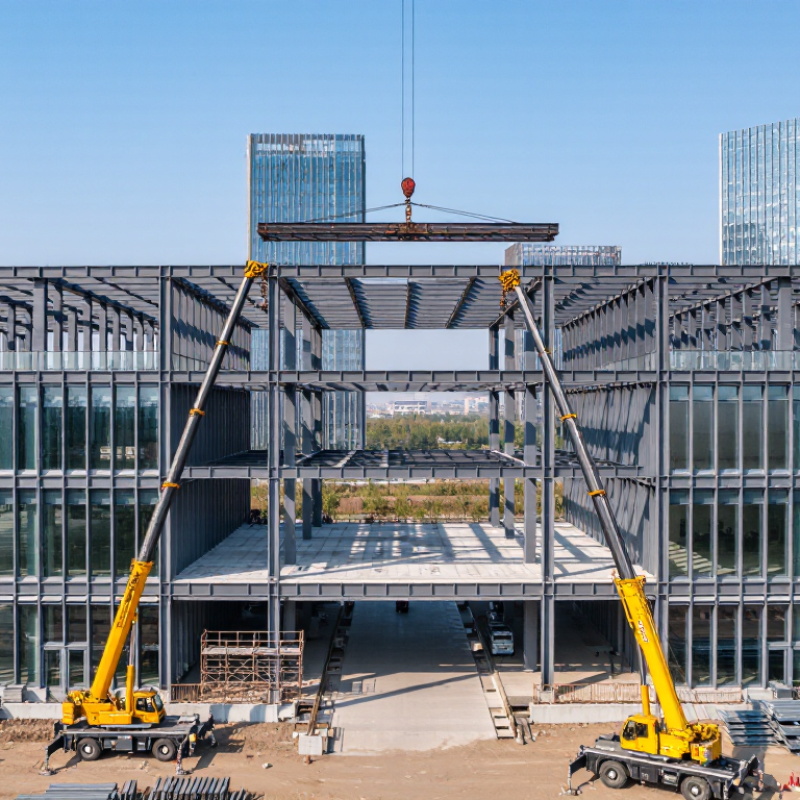
2026 Best Steel Structures Why Are They Popular?

What Are Steel Structures and How Do They Work?

Steel structures use steel columns, beams, braces, and connections to carry building loads. These parts form a frame, much like a strong skeleton. Floors, walls, and roofs transfer their weight into the frame. Columns then direct the forces into foundations.

Steel works because it combines high strength with relatively low weight. A properly designed beam resists bending, while braces control sideways movement from wind or earthquakes.

Bolted connections often allow faster assembly on site. Welded joints can provide continuous strength when detailed and inspected correctly.

Engineers calculate dead loads, live loads, wind pressure, fire exposure, and possible corrosion before selecting each member.

The process is precise, but not perfect. A small connection error can affect the entire load path. Site inspections should check bolt torque, weld quality, alignment, and protective coatings.

Moisture trapped around joints may cause hidden rust later. Fire protection also needs regular attention, not just installation approval.

Steel can be reused, and prefabrication may reduce construction waste. However, producing steel consumes significant energy, so material efficiency matters. A lighter frame is not always better if it needs complex reinforcement. Good design balances strength, safety, cost, maintenance, and the building’s actual environment.

Which Steel Structure Types Are Most Common in 2026?

In 2026, portal-frame buildings remain among the most common steel structures. They suit warehouses, workshops, and agricultural facilities with wide, column-free interiors. Their tapered beams reduce steel use where stresses are lower. A 2024 report from the Metal Building Manufacturers Association identifies low-rise metal buildings as a major construction segment in North America. Exact regional figures vary, so global comparisons require caution.

Multi-storey beam-and-column frames are also widely used in offices, hospitals, and mixed-use projects. Engineers prefer them when floor layouts may change later. Steel trusses serve long-span roofs, stadiums, terminals, and industrial halls. Space frames appear where loads must spread across large, open roofs. The American Institute of Steel Construction’s Steel Construction Manual remains a key technical reference for designing these systems.

Modular and prefabricated steel structures are gaining attention because factories can control cutting, welding, and inspection more consistently. The World Steel Association reported about 1.88 billion tonnes of crude steel production in 2024, showing the scale of the global supply base. Yet availability does not guarantee sustainability. The United Nations Environment Programme’s 2024 Global Status Report notes that buildings consume roughly 32% of global energy and create about 34% of global carbon emissions. Steel frames can be reused, but transport, coatings, fire protection, and foundation work still affect the real footprint. The “best” structure is project-specific. Oversimplification remains a risk.

Why Are Steel Structures Increasingly Popular?

Steel structures are becoming popular because they offer practical answers to modern building demands. A steel frame can span wide rooms with fewer interior columns, creating flexible factories, warehouses, schools, and offices. Its high strength-to-weight ratio can reduce structural weight and simplify transportation, foundations, and installation. On a busy site, prefabricated beams arrive cut, drilled, and labeled. That saves time. Workers can assemble predictable connections with cranes and documented procedures.

Designers increasingly value steel because its properties are measurable and its behavior is well studied. Engineers can model loads, wind, fire protection, corrosion, and seismic movement before construction begins. Quality checks, welding records, bolt inspections, and independent reviews make decisions easier to verify. Steel components can also be reused or recycled, although environmental performance depends on production energy, coatings, transport, and building lifespan. That detail matters. Recyclable is not automatically low impact.

The material is not perfect. Without drainage, paint maintenance, and suitable fire protection, moisture and heat can reduce its service life. Field inspections often reveal how a small water trap near a connection becomes a costly repair point. This is why experienced teams inspect interfaces, not only major beams. Local codes, site conditions, and qualified professionals should guide every design. Sometimes concrete or timber may fit a project better. That should be admitted. A clear inspection plan and realistic maintenance budget remain essential long after the crane leaves the site.

How Are Steel Structures Designed, Built, and Maintained?

Steel structures remain popular in 2026 because they combine strength, speed, and adaptable design. World Steel Association data recorded about 1.89 billion tonnes of crude steel production in 2023. That scale supports a mature supply chain. However, good projects begin with conditions, not material preference.

Engineers first study loads, wind, earthquakes, soil, fire exposure, and future use. They then model beams, columns, bracing, and connections using recognized standards, such as AISC 360 or Eurocode 3. Fabricators cut and drill members under controlled conditions. On site, cranes position the frame, while survey teams check alignment and bolt tension. Welds may require visual, ultrasonic, or magnetic testing. One overlooked connection can weaken an otherwise excellent frame. Some design assumptions still deserve a second review.

Maintenance starts before construction ends. Owners should record steel grades, coating systems, connection details, and inspection dates. ISO 12944 helps engineers select corrosion protection for different environments. In coastal air, inspectors should examine rust around bolts, welds, drainage points, and damaged coatings. The World Steel Association also identifies durability and reuse as important parts of steel’s circularity. Yet recycled content alone does not guarantee a responsible structure.

Tips: Keep water away from steel. Design clear drainage paths. Photograph hidden connections before enclosure. Inspect after unusual vibration, impact, fire, or flooding. A practical maintenance plan should name responsible staff, inspection intervals, and repair triggers.

What Challenges and Future Trends Shape Steel Structures?

Steel structures remain popular in 2026 because they combine strength, speed, and flexible design. However, their future depends on solving several practical challenges. Moisture can cause corrosion around joints, especially in coastal or humid areas. Fire protection also requires careful material selection, inspection, and maintenance. Connection details matter greatly. A small fabrication error may weaken an entire frame. Engineers should verify loads, weld quality, and local building requirements before construction. That sounds simple. It is not.

Digital design is reshaping the industry. Building information modeling can detect clashes before steel reaches the site. Sensors may monitor vibration, temperature, and movement during a structure’s service life. Low-carbon production is another major direction. Recycled steel, efficient furnaces, and lower-emission transport can reduce environmental impact. Automation improves cutting and welding accuracy, but it does not remove the need for skilled supervision. Some projects still depend on outdated drawings or rushed approvals. That weakness deserves honest attention.

Tips: Choose corrosion protection according to the site climate, not appearance alone. Ask for traceable material certificates and documented inspection records. Keep drainage paths clear around steel connections. Review digital models with fabricators before ordering components. Inspect repaired coatings after extreme weather. Small oversights become expensive problems.

2026 Best Steel Structures: Why Are They Popular? — What Challenges and Future Trends Shape Steel Structures?

Evidence-based overview of performance, adoption drivers, challenges, and future development directions

Dimension Verified Data or Indicator Why It Matters for Steel Structures 2026 Outlook Reference Basis
Global material relevance The construction sector accounts for approximately 50% of global steel demand. Steel remains a core material for buildings, bridges, industrial facilities, transport infrastructure, and energy projects. Demand is expected to remain structurally important while low-emission production becomes a stronger purchasing requirement. World Steel Association, steel use by sector
Strength-to-weight performance Structural steel commonly provides yield strengths of about 235–460 MPa in widely used building grades; higher-strength grades are also available. High strength with relatively low member weight can reduce column sizes, foundation loads, and transportation quantities. Higher-strength steel will be used selectively where it reduces total material and lifecycle impacts without increasing fabrication complexity. EN 10025 and common structural design standards
Long-span capability Steel systems can form long-span trusses, space frames, arches, and plate girders with fewer intermediate supports than many conventional systems. Fewer columns improve usable floor area, flexibility, daylighting, logistics, and future interior reconfiguration. Demand will grow in warehouses, transport hubs, sports facilities, data centers, and adaptable commercial buildings. Structural engineering design practice
Off-site fabrication Factory fabrication can improve dimensional control, repeatability, and production planning compared with fully site-based work. More work completed off-site can shorten site activities, reduce weather exposure, and improve worker safety when coordination is effective. Digital fabrication, automated cutting, robotic welding, and modular assembly will become more integrated. Modern construction and fabrication practice
Circularity and recycling Steel is a permanent material: it can be recovered and recycled repeatedly without losing its basic material properties. Design for disassembly, reuse, and recovery can preserve more embodied value than demolition followed by mixed-waste disposal. Material passports, reversible connections, component reuse, and traceable recycled content will receive greater attention. World Steel Association, circular economy principles
Durability and maintenance Corrosion protection is required where steel is exposed to moisture, salts, chemicals, or aggressive environments. Coatings, galvanizing, detailing, inspection, and planned maintenance strongly influence service life and lifecycle cost. Condition monitoring and predictive maintenance will increasingly use sensors, inspection data, and digital twins. ISO 12944 corrosion-protection framework
Fire performance Carbon steel loses strength and stiffness as temperature rises; fire resistance must therefore be demonstrated by design or protection. Fireproofing, concrete encasement, intumescent coatings, compartmentation, and fire engineering can affect cost and usable space. Performance-based fire design and thinner, more efficient protection systems will support wider application. Eurocode 3, EN 1993-1-2
Embodied carbon Primary steel production is emissions-intensive because conventional ironmaking relies heavily on coal-based reduction; actual impacts vary by production route and electricity mix. Structural optimization, recycled input, efficient logistics, reuse, and product-specific environmental declarations are essential for credible carbon reduction. Carbon intensity data and whole-life carbon assessment will increasingly influence specifications, planning approvals, and procurement. IEA, World Steel Association, EN 15804 life-cycle assessment principles
Decarbonization technologies Key pathways include greater electric-arc-furnace use, higher-quality scrap recovery, direct reduced iron, renewable hydrogen, and carbon capture. The transition can reduce emissions but requires clean electricity, suitable raw materials, infrastructure, investment, and reliable policy support. Low-emission steel capacity and verified product-level carbon accounting are expected to expand, although availability may remain limited in some markets. IEA, Net Zero Roadmap and iron-and-steel transition analysis
Digital design and BIM Building information modeling supports coordinated geometry, quantity data, clash detection, fabrication information, and asset records. Better information exchange can reduce rework, improve procurement accuracy, and connect design with fabrication and installation. Parametric design, automated detailing, AI-assisted checking, and digital twins will become more practical as data quality improves. ISO 19650 information-management framework
Supply-chain and price risk Steel prices and delivery times are affected by energy costs, scrap availability, trade policy, transport capacity, and regional demand. Early procurement, standardized sections, alternative connection details, and transparent cost planning can reduce project exposure. Resilient regional sourcing and digital supply-chain tracking will be valued alongside structural performance. Industry market data; conditions vary by region and project period
Skills and quality control Reliable steel construction depends on qualified design, welding, inspection, erection, bolting, and coating processes. Shortages of experienced personnel or weak inspection can create defects, delays, safety risks, and increased lifecycle costs. Certification, automated inspection, digital quality records, and workforce training will be central to scalable growth. ISO 3834 welding-quality principles and project quality plans
Best-fit applications Steel is especially effective where projects require speed, long spans, low structural weight, adaptability, prefabrication, or future disassembly. Typical applications include industrial buildings, logistics facilities, bridges, high-rise frames, energy infrastructure, stadiums, and modular structures. The strongest solutions will combine structural efficiency, low-carbon materials, circular design, digital coordination, and maintainability. General structural engineering and lifecycle-design principles
Data note: Values and statements are general industry benchmarks or standards-based indicators. Actual performance depends on steel grade, design, fabrication quality, exposure conditions, production route, project location, and applicable building regulations.

FAQS

What are steel structures?

Steel structures use columns, beams, braces, and connections as a building’s load-carrying frame. They act like a strong skeleton. Floors, walls, and roofs transfer weight into this frame. Columns then transfer forces into foundations.

Why is steel suitable for buildings?

Steel combines high strength with relatively low weight. Beams resist bending, while braces limit sideways movement from wind or earthquakes. A lighter frame can save materials, but it is not always the best choice.

How are steel structures designed?

Engineers study loads, wind, earthquakes, soil, fire exposure, corrosion, and future building use. They calculate beams, columns, braces, and connections before fabrication begins. Some design assumptions still deserve a second review.

How are steel frames assembled on site?

Fabricators cut and drill members under controlled conditions. Cranes position the pieces, while survey teams check alignment and bolt tension. Bolted connections can speed assembly. Welded joints need careful detailing and inspection.

What inspections are important during construction?

Inspectors should check bolt torque, weld quality, alignment, and protective coatings. Welds may receive visual, ultrasonic, or magnetic testing. One overlooked connection can weaken an otherwise excellent frame.

How can corrosion be prevented?

Keep water away from steel. Provide clear drainage paths around joints and foundations. Inspect bolts, welds, drainage points, and damaged coatings, especially in coastal or humid areas.

Does steel require ongoing maintenance?

Yes. Owners should record steel grades, coatings, connection details, and inspection dates. Inspect after unusual vibration, impact, fire, flooding, or extreme weather. Fire protection needs attention beyond installation approval.

Can steel structures reduce environmental impact?

Steel can be reused, and prefabrication may reduce construction waste. Efficient material use, recycled content, lower-emission production, and careful transport can help. Recycled content alone does not guarantee a responsible structure.

Conclusion

Steel structures are engineered systems that use steel beams, columns, frames, and connections to support buildings, bridges, industrial facilities, and other large-scale projects. In 2026, common types include rigid frames, trusses, space frames, modular systems, and composite steel-concrete structures. Each type is selected according to factors such as span, load, building purpose, site conditions, construction speed, and budget.

The main reasons why steel structures are popular in modern construction include their high strength-to-weight ratio, design flexibility, durability, recyclability, and suitability for prefabrication. Their components can be accurately manufactured, transported, and assembled, helping reduce construction time and material waste. Effective design requires structural analysis, connection planning, safety checks, and protection against corrosion and fire. Regular inspection, cleaning, and timely repairs help extend service life. Looking ahead, automation, digital modeling, low-carbon steel production, smart monitoring, and more efficient modular construction will continue to shape the development of steel structures.

Ethan

Ethan

Ethan is a seasoned marketing professional with a deep expertise in our company's innovative product line. With a passion for sharing knowledge and insights, he takes the lead in regularly updating our corporate blog, where he explores industry trends, product features, and effective marketing......