BLS Structural Steel BLS Structural Steel

How Does Steel Forming Work in Manufacturing?

Time:2026-11-01 Author:Oliver
0%

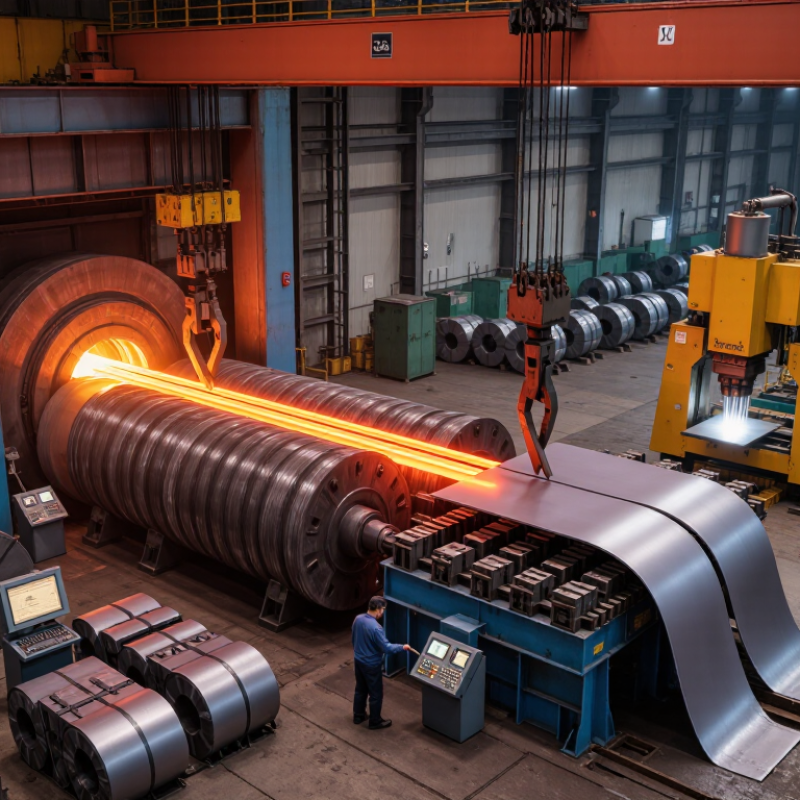
Steel forming turns solid metal into useful shapes through controlled force, heat, and carefully designed tools. The process may begin with a slab, billet, or coil, depending on the product. Rolling presses steel between rotating rolls to reduce thickness. Forging compresses heated or room-temperature metal into a stronger shape. Stamping and bending create panels, brackets, and other formed parts. Each method suits different materials, dimensions, and production needs.

Temperature changes how steel responds. Hot forming makes it easier to shape large sections, while cold forming can improve surface finish and dimensional accuracy. Neither approach is automatically better. Engineers consider steel grade, part geometry, expected loads, equipment limits, and production volume. Small changes matter. A few degrees of temperature or a worn die can affect a part’s dimensions. That detail is easy to underestimate.

Understanding how steel forming works in manufacturing means looking beyond the machine itself. Operators and engineers monitor temperature, forming force, tool condition, and finished dimensions. They may inspect samples for cracks, uneven thickness, or springback, where metal partly returns toward its original shape. These checks help catch problems before they spread through a production run. Still, a clean diagram cannot show every shop-floor variation. Material batches differ, and real tooling wears. Good process control reduces surprises, but it does not remove the need to review results and adjust carefully.
How Does Steel Forming Work in Manufacturing?

Steel Forming Fundamentals: Shape Metal by Deforming It Past Yield

How Does Steel Forming Work in Manufacturing?

Steel forming gives metal a new shape by pushing it beyond its yield strength. Below that point, steel may bend briefly and return toward its original form. Past yield, its structure changes permanently. That is the key. The force must be high enough to shape the steel, but controlled to avoid cracks or unwanted thinning.

Manufacturers use processes such as rolling, bending, drawing, and forging. In rolling, rotating cylinders compress a heated or cold steel slab into a thinner sheet. A press brake can bend that sheet around a precise tool, leaving a sharp edge or a broad curve. The result depends on steel grade, thickness, temperature, and tool design. Even small changes matter.

Forming is not just pressure. Operators account for springback, the slight movement steel makes after the force is removed. They may adjust the tooling, then check sample parts with gauges. Surface marks and uneven thickness can reveal trouble early. The textbook yield point sounds exact; real production is less tidy. Material varies, and a setting that works for one batch may need adjustment for the next. Careful testing helps keep dimensions consistent without forcing the metal past its workable limits.

Minimum Yield Strength of Common Structural Steels

Steel begins to deform permanently when stress exceeds its yield strength. These bars show specified minimum yield strengths; actual material properties can vary. Forming operations are designed around the specific steel grade and process conditions.

Values: ASTM A36, 250 MPa; ASTM A572 Grade 50, 345 MPa; ASTM A992, 345 MPa. Values are rounded conversions from the specified minimums of 36 ksi and 50 ksi.

Stock Preparation: Reheat Steel Slabs to Roughly 1,100–1,250°C

Steel slabs are reheated to roughly 1,100–1,250°C before rolling. The exact target depends on steel grade, slab thickness, and the mill’s process. Furnace burners raise the surface temperature first; the slab’s core needs time to catch up. A bright surface alone does not prove the whole piece is ready.

Operators manage heating rate and soak time to reduce temperature differences without creating excessive scale or surface damage. Too cold, and the slab may resist rolling or strain equipment. Too hot, and oxidation increases while steel quality can suffer. Scale flakes may break away during rolling, but they are not harmless: they can mark the surface. A practical check combines temperature readings with furnace timing and product specifications. Not every slab responds identically, which makes a single “ideal” setting tempting but misleading.

The energy cost is substantial. The International Energy Agency’s Iron and Steel Technology Roadmap (2020) reports that steelmaking uses about 8% of global final energy and produces roughly 7% of energy-related CO₂ emissions. Those figures cover the wider sector, not reheating alone, but they show why furnace efficiency matters. Better insulation, controlled combustion, and heat recovery can reduce fuel demand. Still, tighter control takes attention; it is easy to chase efficiency and overlook uneven heating.

Hot Rolling: Shape Steel Above Recrystallization, Often at 900–1,200°C

Hot rolling shapes steel while it is hot enough to deform easily and recrystallize. Many operations run around 900–1,200°C, though the suitable range depends on steel grade, product thickness, and mill setup. A glowing slab passes through successive roller stands; each pass reduces thickness and stretches the metal.

Recrystallization helps replace distorted grains as the steel deforms, but temperature loss can make the final passes harder and affect consistency. The surface is not always uniform. Scale and uneven cooling can complicate control.

Temperature and timing matter. Operators monitor furnace conditions, rolling speed, and strip temperature, then adjust the passes to meet the target dimensions and properties.

World Steel Association’s 2023 Sustainability Indicators report gives a global average of about 1.91 tonnes of CO₂ per tonne of crude steel for 2022. That figure covers crude steel production, not hot rolling alone, but it highlights why avoiding excess reheating and energy waste matters.

One practical challenge is that a neat process diagram cannot capture every temperature variation across a real slab.

Tips: Calibrate pyrometers regularly. Check edge temperatures, not just the center. Record changes between passes; small differences can matter.

Cold Forming: Roll Steel Below Recrystallization Near Room Temperature

Cold forming shapes steel below its recrystallization temperature, often near room temperature. In a roll-forming line, successive stands gradually bend a flat strip into a chosen profile. The strip moves through grooved rollers; each pass makes a small change. No reheating step is needed to create the shape, and the finished surface can retain a clean, scale-free appearance. That sounds simple. It isn’t.

Deformation strengthens many steels through work hardening, but it can also reduce ductility. Tight bends may stretch the outer surface enough to cause cracking, especially if the grade, thickness, or bend radius is poorly matched. Operators watch roll alignment, lubrication, and strip tension, then inspect the profile for twist and springback. Small adjustments matter. World Steel Association’s World Steel in Figures 2024 reports 1,892.2 million tonnes of crude steel production worldwide in 2023. That scale makes material efficiency important, though the figure describes steelmaking overall, not cold-forming output. A practical line still needs trials: real coils vary, and a setup that works on paper may need correction on the factory floor.

How Does Steel Forming Work in Manufacturing? — Cold Forming: Roll Steel Below Recrystallization Near Room Temperature

Dimension Typical Condition or Observation What It Means in Manufacturing
Process temperature Usually near room temperature and below the steel’s recrystallization temperature. The exact recrystallization temperature varies with steel composition, prior processing, and amount of deformation; it is not one fixed temperature for every steel.
How deformation occurs Rollers apply compressive force to reduce thickness and change the steel’s cross-section. Multiple passes may be used to reach the required dimensions while managing forming load and material condition.
Common equipment Two-high, four-high, or multi-roll mills are used, depending on the product and required control. Roll configuration affects stiffness, thickness control, and the ability to process thinner strip.
Typical products Steel sheet, strip, and coil; cold rolling can also be part of the production route for other formed products. These products are used where controlled thickness, a smooth surface, or consistent dimensions are important.
Dimensional accuracy Cold rolling generally provides closer thickness control than hot rolling. Achievable tolerances depend on the mill, product thickness, steel grade, and inspection requirements.
Surface finish Typically smoother and more uniform than a hot-rolled surface. Surface condition also depends on incoming material, roll finish, lubrication, and handling.
Strength and hardness Plastic deformation causes work hardening, which generally increases strength and hardness. The amount of increase depends on steel grade and the degree of reduction.
Ductility Formability generally decreases as work hardening increases. Intermediate annealing may be used when additional forming is needed to restore ductility.
Forming force and energy Cold rolling requires substantial force because the steel is not softened by hot-working temperatures. Equipment capacity, roll condition, lubrication, and pass schedule are considered when planning production.
Residual stress Non-uniform deformation can leave residual stresses in the rolled product. These stresses may affect flatness or dimensional stability during later cutting and forming operations.
Lubrication and cooling Rolling fluids may reduce friction, manage heat, and help protect the surface. Fluid selection and application depend on the rolling process, steel grade, and downstream cleaning requirements.
Process limitations High forming loads, reduced ductility, and possible surface or shape defects must be managed. Operators control reduction, alignment, roll condition, and material quality to help maintain consistent output.

Note: Values and outcomes are process-dependent. Steel grade, initial condition, mill design, lubrication, and reduction schedule all influence cold-rolled product properties.

Finishing and Quality Checks: Measure Thickness, Tolerances, and Strength

After forming, steel is checked while the surface is clean, accessible, and still traceable to its production lot. Operators measure thickness with calibrated micrometers at several points across the sheet, including near both edges. A single reading can miss local variation. Compare results with the tolerance specified for that product and order; ASTM A568/A568M sets general requirements, but allowable variation depends on dimensions and steel type. Small details matter. Burrs or uneven edges can distort readings, so inspectors note measurement locations and instrument condition.

Thickness alone cannot confirm performance. Tensile tests, commonly conducted under ASTM E8/E8M, measure properties such as yield strength and tensile strength using prepared specimens. Hardness checks can help flag inconsistent material, but they do not replace required tensile testing. The World Steel Association’s World Steel in Figures 2024 reports 1,892.2 million tonnes of crude steel production worldwide in 2023. At that scale, recorded sampling and traceable results are essential—not just tidy paperwork. A passing average may still hide a weak spot. Review individual measurements against the specification, investigate outliers, and document any retest; inspection is only as reliable as its sampling plan.

FAQS

What is steel forming?

Steel forming reshapes metal by applying force beyond its yield strength. The change is permanent.

Which processes can shape steel?

Common methods include rolling, bending, drawing, and forging. Rolling compresses steel between rotating cylinders.

Why does steel spring back after bending?

Steel may move slightly when the forming force is removed. Operators adjust tools and inspect sample parts.

What affects the final shape?

Steel grade, thickness, temperature, and tool design all matter. Small changes can alter the result.

How do inspectors check sheet thickness?

They use calibrated micrometers at several points, including near both edges. One reading may miss variation.

Do thickness measurements confirm steel strength?

No. Tensile tests measure yield and tensile strength using prepared specimens.

Can hardness checks replace tensile tests?

No. Hardness checks can flag inconsistent material, but required tensile testing provides different information.

Why record individual measurements and retests?

A good average can hide a weak spot. Inspectors review outliers and document retests.

What can interfere with accurate measurements?

Burrs, uneven edges, or instrument condition can affect readings. The clean theory gets messy.

Conclusion

Understanding how steel forming works in manufacturing begins with a simple principle: steel is shaped by applying force until it deforms beyond its yield point. Before forming, steel slabs are prepared and reheated to roughly 1,100–1,250°C, making the material suitable for the next stage. The temperature and process are chosen according to the desired shape and properties.

In hot rolling, steel is shaped above its recrystallization temperature, often at 900–1,200°C. For cold forming, steel is rolled below that temperature, typically near room temperature, which allows dimensions and surface characteristics to be controlled differently. After forming, the steel is inspected and finished. Checks commonly measure thickness, dimensional tolerances, and strength to confirm that the material meets the intended requirements. Together, these stages turn prepared steel into products ready for further use.

Oliver

Oliver

Oliver is a seasoned marketing professional with a wealth of expertise in driving brand awareness and engagement. With a deep understanding of our company's product offerings, he consistently delivers high-quality content that enriches our professional blog. His insights not only shed light on......