When discussing what makes steel strong for structures, expert Dr. Emily Carter emphasizes the importance of material composition. "The right blend of elements can enhance steel's strength significantly," she states. This insight is crucial for engineers and architects aiming to design safer and more resilient buildings.
Steel's strength is not merely a function of its chemical makeup; it also relies on the production process. Factors such as temperature, pressure, and cooling rate play vital roles. Each component influences the overall integrity of structural steel. Understanding these elements is essential for anyone involved in construction.
However, even with advanced knowledge, challenges remain. Engineers must continuously refine techniques and materials to improve performance. The evolving nature of building codes and environmental standards adds complexity. Reflecting on these nuances helps the industry adapt and innovate in creating robust structural solutions.
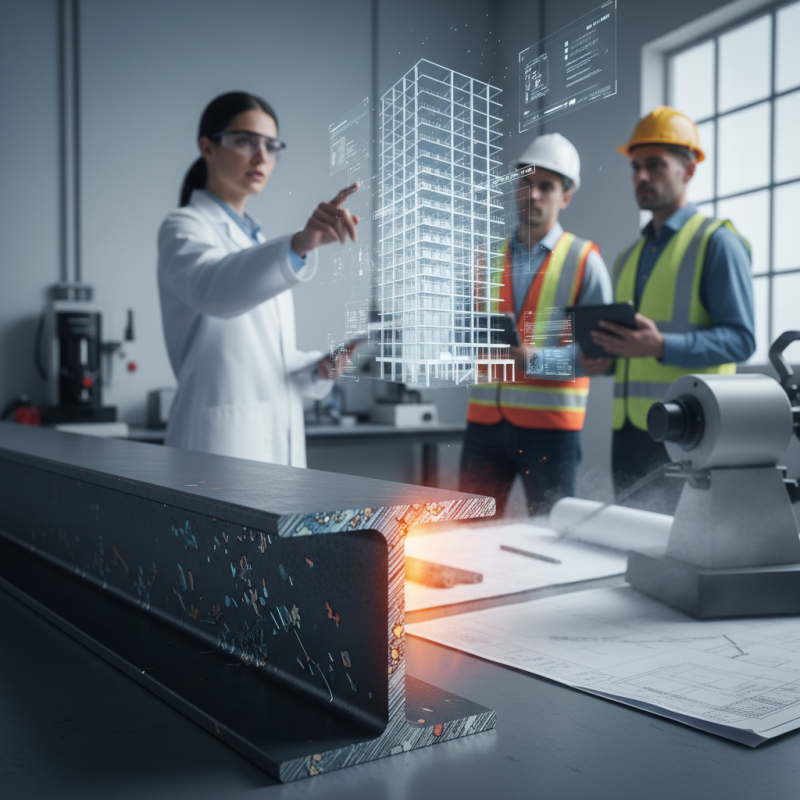
Understanding the Fundamental Properties of Steel in Construction
Steel plays a crucial role in construction due to its fundamental properties. Its strength-to-weight ratio is remarkable, allowing for tall structures without excessive material. This unique property enables engineers to design large buildings with fewer resources. Additionally, steel's ductility makes it resilient under various stress conditions. Rather than breaking, it bends, which is crucial during earthquakes.
Corrosion resistance is another significant property of steel. When properly treated, steel can withstand harsh environmental conditions. This means structures can last for decades, reducing the need for frequent repairs. However, it's important to routinely check for signs of corrosion. Regular inspections are essential for ensuring longevity and safety.
Moreover, the production process of steel impacts its properties. Variations in alloying elements can enhance strength but also introduce challenges. Striking a balance between strength and malleability is often necessary. Each project may require different specifications, making expert knowledge vital. Understanding these nuances can prevent future issues and ensure the safety of structures.
The Role of Alloying Elements in Enhancing Steel Strength
Alloying elements play a crucial role in enhancing the strength of steel used in construction. Common elements, like carbon and manganese, are particularly significant. Carbon increases hardness and tensile strength, while manganese improves ductility and toughness. These traits are essential for structural integrity.
Nickel is another important alloying element. It adds corrosion resistance, which is vital for structures exposed to harsh environments. Chromium also contributes by improving hardness and resistance to wear. However, too much of these elements can make steel brittle. This delicate balance requires careful consideration during the steel-making process.
Understanding the impact of each alloying element is essential for engineers. Each choice affects the final product’s performance. There’s room for improvement in the steel-making industry. Innovative methods can optimize alloy compositions for specific applications. As markets evolve, so should our approaches to alloying.
Exploring Heat Treatment Techniques for Structural Steel
Heat treatment plays a critical role in enhancing the strength and durability of structural steel. The process involves heating steel to high temperatures and then rapidly cooling it. This method reduces internal stresses and enhances mechanical properties such as tensile strength and ductility. According to the American Institute of Steel Construction, heat-treated steel can exhibit strength improvements of 20% to 40%, making it suitable for demanding applications in construction.
Different heat treatment techniques, such as quenching and tempering, can tailor the properties of structural steel for specific needs. Quenching involves immersing the heated steel in water or oil to achieve a hard, resilient structure. However, it can also lead to brittleness if not tempered properly. Tempering restores some ductility without sacrificing significant strength. Data from the Journal of Materials Engineering indicates that tempering can reduce brittleness by up to 50%, underscoring the need for careful process control.
While these techniques offer impressive benefits, they require thorough understanding and precision. Miscalculations in temperature or timing can lead to incomplete heat treatment, affecting structural integrity. Engineers must assess each project’s unique demands and monitor the treatment closely to ensure optimal results. The balance between strength and ductility remains a complex challenge, emphasizing the need for continued research and development in heat treatment methodologies.
What Makes Steel Stronger for Structures: Heat Treatment Techniques
Assessing the Impact of Steel Fabrication Methods on Strength
Steel fabrication methods significantly affect the strength of steel structures. Different techniques can yield varying results in terms of durability and weight. For instance, welding can create strong joints, but improper techniques may lead to weaknesses. Each step in the fabrication process can influence the overall integrity of the steel.
Hot working and cold working are two common methods that impact strength. Hot working can improve ductility and reduce defects, but it may not be suitable for all applications. Cold working enhances hardness but can also introduce residual stresses. Understanding which method to use is essential for specific structural needs.
Moreover, technological advancements are constantly changing fabrication techniques. Automation and precision machining can lead to stronger components. However, relying too heavily on technology may overlook the skill level of workers. Balancing advanced methods with human expertise is a crucial aspect of steel fabrication. While improvements are evident, continuous evaluation of these methods will help optimize strength.
What Makes Steel Stronger for Structures: 5 Key Tips - Assessing the Impact of Steel Fabrication Methods on Strength
| Fabrication Method |
Strength Benefit |
Weight Consideration |
Applications |
| Hot Rolling |
Improved ductility and toughness |
Generally lighter than cold-rolled |
Structural beams, bridges |
| Cold Rolling |
Higher yield strength |
Weight can vary based on thickness |
Metal sheets, automotive parts |
| Welding |
Enhanced joint strength |
Minimal weight addition |
Frame structures, pipelines |
| Casting |
Complex shapes with good strength |
Can be heavier |
Pillars, machinery bases |
| Forging |
Superior toughness and impact resistance |
Generally results in compact components |
High-stress components, aerospace |
Innovative Technologies for Strengthening Steel in Modern Structures
Innovative technologies are reshaping the steel industry. Recent reports show that advanced materials and processes enhance steel strength. For instance, high-performance steel alloys exhibit up to 30% greater tensile strength. This improvement is crucial for modern structures facing intense loads.
One exciting development is the use of nano-coatings. These coatings can significantly strengthen steel surfaces. They improve fatigue resistance and reduce corrosion, extending the life of structures. Another innovative method involves the application of additive manufacturing techniques. This technology allows for more complex geometries, enabling better load distribution.
However, challenges remain. Incorporating new materials can complicate construction processes. There is also the risk of higher costs, which may deter widespread adoption. Despite the potential benefits, careful consideration of these factors is necessary. As technology progresses, ongoing research will likely address these concerns, leading to stronger, more resilient structures.
FAQS
: Heat treatment enhances strength and durability by heating steel and rapidly cooling it.
Heat-treated steel can show strength improvements of 20% to 40% in construction applications.
Quenching involves immersing heated steel in water or oil for a hard structure.
Quenching can lead to brittleness if the steel is not properly tempered afterward.
Tempering restores ductility while maintaining most of the strength, reducing brittleness by up to 50%.
Improper temperature can lead to incomplete treatment, affecting the integrity of the steel.
Weaknesses can arise from improper welding techniques, impacting the overall structural integrity.
Hot working improves ductility, while cold working enhances hardness but adds residual stresses.
Automation can create stronger components but may lessen the importance of skilled workers.
Ongoing evaluation helps to optimize strength and adapt to new technologies in steel fabrication.
Conclusion
The article "What Makes Steel Stronger for Structures: 5 Key Tips" delves into the essential attributes that contribute to the strength of steel used in construction. It begins by exploring the fundamental properties of steel, such as its tensile strength and ductility, which are critical for structural integrity. The discussion then shifts to the role of alloying elements, highlighting how additions like manganese and nickel enhance steel's performance under various stress conditions.
Further, the article examines various heat treatment techniques, such as quenching and tempering, that improve hardness and durability. Steel fabrication methods are assessed for their influence on structural strength, emphasizing the importance of precise welding and forming processes. Finally, it touches on innovative technologies that are being developed to strengthen steel for modern structures, ensuring they meet contemporary engineering demands. Overall, understanding what makes steel strong for structures is vital for constructing safe, resilient buildings.
 BLS Structural Steel
