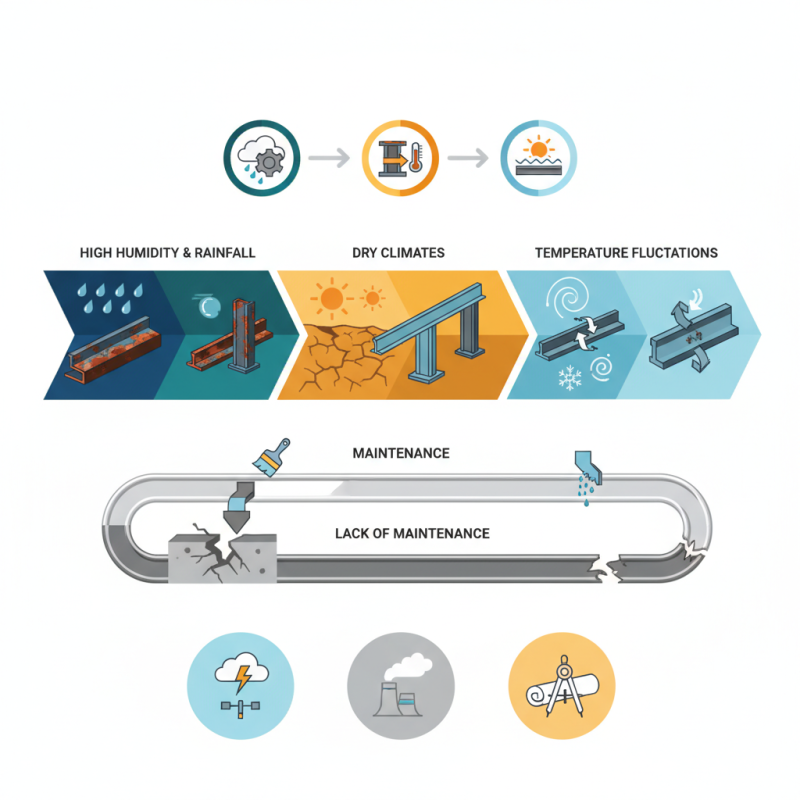
When considering the lifespan of steel structures outdoors, various factors play a crucial role. The question of how long steel structures last outdoors is particularly relevant in different climates. Environments with high humidity and frequent rainfall can accelerate corrosion. In contrast, dry climates may offer a longer lifespan, yet temperature fluctuations can still impact structural integrity.
Steel is a robust material, but it is not impervious to environmental challenges. Regular maintenance is vital for extending the life of steel structures. Protective coatings and effective drainage systems mitigate deterioration. However, not all structures receive the care they need, leading to potential failures.
Understanding how long steel structures last outdoors requires a comprehensive look at exposure conditions and maintenance practices. Local weather patterns, pollution levels, and design choices all influence durability. Ultimately, awareness of these factors can guide engineers and architects in making informed decisions.
Factors Influencing the Longevity of Steel Structures in Outdoor Environments
Weather plays a crucial role in the longevity of steel structures outdoors. In coastal regions, saltwater can accelerate rusting. Steel exposed to high humidity may corrode faster than in arid environments. Similarly, extreme temperatures, both hot and cold, can stress the material, affecting its structural integrity.
Protective coatings are vital but not foolproof. These coatings wear out over time, requiring regular maintenance. In natural disaster-prone areas, steel structures must withstand heavy winds and seismic activity, which complicates their durability. Even well-constructed buildings may require assessments after severe weather events.
Environmental pollutants also contribute to the degradation of steel. Urban areas with high levels of air pollution can induce rust. Relying solely on initial engineering is insufficient. Owners must actively monitor and maintain their structures to ensure safety and longevity. It's worth considering that some structures may face unexpected vulnerabilities as conditions change. Regular inspections and adaptive strategies are key for extending their lifespan.
Longevity of Steel Structures in Different Climates
This chart displays the estimated lifespan of steel structures exposed outdoors in various climate conditions, taking into account factors such as humidity, temperature fluctuations, and pollution levels. The data reflects the average lifespan in years across four different environments: Coastal, Arid, Temperate, and Tropical.
Impact of Humidity Levels on Steel Corrosion Rates and Structure Durability
Humidity plays a crucial role in the corrosion rates of steel structures. In areas with high humidity, moisture accumulates on the surface of steel. This moisture creates an ideal environment for rust to form. Over time, even the most durable steel can suffer from significant damage in such climates.
Corrosion not only impacts the appearance of steel structures but also their integrity. In coastal regions, salty air accelerates corrosion. In contrast, arid climates may experience slower corrosion rates. However, fluctuations in temperature can still pose risks. Thermal expansion and contraction may lead to microscopic cracks, allowing moisture to penetrate.
Regular maintenance is essential to prolong the lifespan of steel structures. Simple practices, such as applying protective coatings, can make a difference. Yet, many overlook these necessities. Awareness of local climate conditions can drive better maintenance strategies. Understanding these factors can lead to more resilient, long-lasting steel infrastructures.
Temperature Extremes: How Heat and Cold Affect Steel Integrity Over Time
Steel structures are commonly used in outdoor environments, but their longevity under temperature extremes is a critical consideration. High heat can alter the properties of steel, potentially leading to deformation. Research by the American Institute of Steel Construction shows that steel’s yield strength decreases significantly at temperatures above 800°F. In cold climates, steel becomes brittle. The National Institute of Standards and Technology (NIST) indicates that at temperatures below -40°F, fractures are more likely to occur, particularly in improperly treated steel.
Corrosion is another major concern. Humid climates accelerate rust formation, which compromises structural integrity. The Corrosion Prevention Association states that even galvanized steel can suffer in coastal areas due to salty air. For every 10°F increase in temperature, the rate of corrosion can double. Weather variations can lead to unforeseen issues that could require ongoing maintenance and inspection. Over time, differences in expansion and contraction due to temperature shifts can create stress points, raising the risk of structural failure.
Understanding these factors is essential for effective planning. Engineers should not only rely on initial strength data but also consider environmental impacts. Regular inspections in varying climates are crucial for assessing steel integrity. Emphasizing preventive measures can prolong the life of steel structures, albeit at a higher initial cost. It is vital to think long-term to ensure safety and durability.
Role of Protective Coatings in Extending Steel Structure Lifespan in Diverse Climates
Protective coatings play a crucial role in extending the lifespan of steel structures, especially in variable climates. According to a report by the American Institute of Steel Construction, unprotected steel can corrode significantly within five years in salty, coastal environments. Conversely, structures in inland areas may last decades without visible rust. Protective coatings, such as galvanization and paints, can enhance durability considerably.
In humid regions, the need for effective coatings amplifies. Research indicates that stainless steel structures can experience a lifespan increase of 50% to 100% when properly coated. However, choosing the right coating is challenging. For example, some coatings perform well in dry conditions but fail in moisture-rich climates. These failures can lead to premature deterioration, emphasizing the importance of tailored solutions.
Moreover, the maintenance of these coatings is equally critical. The National Association of Corrosion Engineers highlights that regular inspections and timely touch-ups can double the lifespan of protective finishes. Neglecting this aspect can reverse the advantages gained from initial investments in coatings. With varied environmental factors at play, continuously evolving maintenance strategies are essential for ensuring the longevity of steel structures outdoors.
Case Studies: Lifespan of Steel Structures in Various Climatic Conditions
Steel structures face varying lifespans depending on climate conditions. For example, in coastal regions with high humidity and salt exposure, the average lifespan can be significantly reduced. A study published by the American Institute of Steel Construction found that steel subjects to such environments may last around 15-20 years if not properly maintained. Regular corrosion protection treatments can extend this lifespan.
In contrast, structures built in arid climates often see longer durations. Research indicates that in dry and less corrosive environments, steel can last upwards of 50 years. However, even these structures require occasional inspection for rust and wear. A routine maintenance plan is crucial. Ignoring minor issues can lead to major repairs.
Tips: Always consider environmental factors when evaluating steel durability. Choose appropriate coatings to resist specific local conditions. Installment of drainage systems can also prevent water accumulation, reducing corrosion risk. Regular checks can save money in the long run.
How Long Do Steel Structures Last Outdoors in Different Climates? - Case Studies: Lifespan of Steel Structures in Various Climatic Conditions
| Climate Type |
Average Lifespan (years) |
Factors Affecting Durability |
Maintenance Recommendations |
| Tropical Humid |
15-20 |
High humidity, corrosion due to moisture |
Regular inspections, protective coatings |
| Desert Dry |
30-40 |
Low moisture, thermal expansion |
Minimal maintenance, periodic checks |
| Temperate |
25-35 |
Seasonal changes, moderate moisture |
Regular maintenance, protective paint |
| Subarctic |
20-30 |
Heavy snow, freezing and thawing cycles |
Snow removal, corrosion-resistant materials |
| Marine |
15-25 |
Salt air, high humidity |
Frequent maintenance, galvanization |
FAQS
: Weather conditions like humidity, temperature, and coastal saltwater can significantly affect steel structures' longevity.
High humidity leads to moisture accumulation, creating conditions that accelerate rust formation on steel surfaces.
Yes, protective coatings are crucial for extending the lifespan of steel structures but require regular maintenance.
Coatings wear out due to environmental exposure and physical wear, necessitating timely inspections and maintenance.
High levels of air pollution in urban areas can induce rust and accelerate the degradation of steel structures.
Regular inspections, applying protective coatings, and timely maintenance can significantly enhance the lifespan of steel structures.
Yes, thermal expansion and contraction can lead to microscopic cracks, allowing moisture entry and increasing corrosion risk.
No, some coatings may excel in dry conditions but fail in humid environments, risking premature deterioration.
Regular inspections are essential, especially after severe weather events, to assess potential vulnerabilities.
Yes, failing to maintain coatings can undo the advantages gained, resulting in earlier corrosion and structural issues.
Conclusion
Steel structures are designed to withstand a range of outdoor conditions, but their longevity varies significantly based on several environmental factors. The article examines how long steel structures last outdoors by exploring the impact of humidity levels on corrosion rates, which can accelerate deterioration in certain climates. Additionally, it addresses how temperature extremes, both heat and cold, influence the integrity of steel over time.
Protective coatings play a crucial role in extending the lifespan of steel structures, providing an essential barrier against environmental stresses. Through case studies, the article highlights the varying lifespans of steel structures in different climatic conditions, offering insights into the best practices for maintaining their durability. Understanding these factors is key to maximizing the longevity of steel constructions in outdoor environments.
 BLS Structural Steel
