In an era where sustainability and efficiency are paramount, the construction industry increasingly turns to steel structures. Renowned architect Dr. Samuel Reed emphasizes this trend, stating, "Steel offers unmatched strength and versatility." His insight highlights why steel structures are popular in modern construction.
Modern buildings require materials that can withstand various stresses. Steel, with its remarkable tensile strength, fulfills this need. It can support substantial loads while maintaining a lighter framework compared to traditional materials. This property leads to more innovative designs and larger open spaces. Additionally, steel structures can be prefabricated, minimizing construction time and waste.
Cost efficiency also plays a crucial role. Despite fluctuations in raw material prices, steel structures often result in lower long-term maintenance costs. However, there are challenges too. Corrosion and fire resistance must be meticulously addressed. Understanding why steel structures are popular in modern construction involves recognizing these complexities and seeking continuous improvement in techniques and materials.
Advantages of Steel in Structural Integrity and Durability
Steel structures have gained immense popularity in modern construction due to their exceptional structural integrity. Steel offers remarkable strength-to-weight ratios, allowing for lighter structures that do not compromise on stability. This characteristic is particularly important in earthquake-prone areas, where buildings need flexibility and resilience. Steel can withstand heavy loads, making it ideal for skyscrapers and bridges.
Durability is another critical advantage of using steel in construction. Steel is resistant to various environmental factors, including corrosive substances and extreme weather. This longevity reduces maintenance costs over time. However, the initial treatment to prevent rust can be an added expense. While steel structures generally last longer than traditional materials, they must still be properly maintained to ensure their longevity.
Moreover, the versatility of steel in design cannot be overlooked. Architectural innovations can lead to intricate designs with steel, enabling unique shapes and larger open spaces. Yet, the reliance on its extensive use raises questions about sustainability. As steel production can be energy-intensive and environmentally damaging, a balance must be achieved between its benefits and ecological impact. The world of construction continues to evolve, highlighting the need for responsible and innovative practices.
Cost-Effectiveness of Steel Structures in Modern Construction
Steel structures are gaining traction in modern construction due to their cost-effectiveness. The initial investment in steel is often higher than wood or concrete. However, the long-term savings are substantial. Steel’s durability means lower maintenance costs over time. This resilience against environmental factors reduces repair expenses significantly.
Another key aspect is the speed of construction. Steel components are prefabricated, allowing quicker assembly on-site. This results in reduced labor costs and shorter project timelines. The efficient use of materials also minimizes waste, further enhancing cost-effectiveness. In an era where sustainability is crucial, steel's recyclability adds to its allure.
Yet, challenges remain. Steel requires anti-corrosion treatments, which can add to costs. There’s also the challenge of skilled labor for installation. These factors may deter some builders. Balancing initial costs and long-term benefits is essential for decision-makers. Understanding both the advantages and limitations is vital for optimizing outcomes in modern construction.
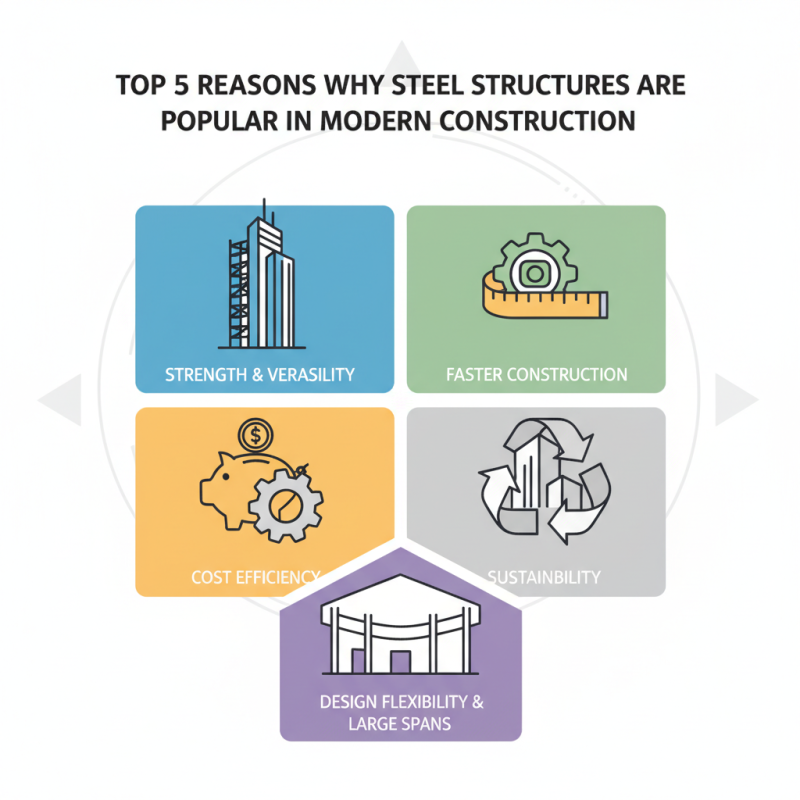
Top 5 Reasons Why Steel Structures Are Popular in Modern Construction
Flexibility and Versatility of Steel in Design Applications
Steel structures are gaining popularity due to their flexibility and versatility in design applications. Architects like steel for its ability to support large spans without intermediate supports. This allows for open spaces, making it ideal for auditoriums, warehouses, and modern homes. The material can be easily shaped and fabricated into various forms. Curved designs, intricate shapes, and high-rise buildings all benefit from steel’s adaptability.
Moreover, steel can work well with other materials. For instance, combining steel with glass creates stunning facades. Such structures look impressive and are energy-efficient. The use of steel in mixed-use developments has surged, as it supports diverse functions within a single edifice. While traditional materials might limit design options, steel encourages creativity and exploration.
However, the reliance on steel does come with challenges. Weather conditions can affect its thermal performance. Additionally, the potential for corrosion requires careful consideration. These factors mean designers must be diligent in their planning. While steel offers freedom in design, it also demands a thoughtful approach to achieve long-lasting results.
Sustainability and Environmental Benefits of Steel Construction
Steel construction is increasingly recognized for its
sustainability and environmental benefits. According to the World Steel Association,
steel is 100% recyclable without loss of quality. This characteristic significantly reduces waste
in modern construction. In fact, recycling steel can save up to
75% of the energy required to produce new steel from raw materials. This process lowers
greenhouse gas emissions and conserves natural resources.
Moreover, steel buildings can achieve higher energy efficiency. The
U.S. Department of Energy notes that steel-framed structures encourage better
insulation. This leads to a reduction in energy costs by as much as 30%.
Many projects utilizing advanced steel technologies result in lower operational footprints. However, it's essential to note
that the production phase still has environmental impacts, which require industry commitment
to green practices.
In addition, steel structures tend to have longer lifespans. They withstand extreme weather
and resist decay. This longevity translates to less frequent rebuilding, which can be resource-intensive.
Nevertheless, concerns about mining and production processes persist.
Sustainable sourcing of materials and reducing emissions during
manufacturing remains crucial for truly eco-friendly construction. The industry is making strides, but continued
improvement is vital for a sustainable future.
Speed of Construction and Project Efficiency with Steel Materials
Steel structures are increasingly popular in modern construction due to their speed and efficiency. Building with steel allows projects to proceed at a rapid pace. According to a report by the American Institute of Steel Construction, steel framing can reduce overall construction time by up to 30%. This speed greatly benefits developers and contractors who face tight deadlines.
Furthermore, steel's lightweight nature contributes to quicker assembly. Prefabricated steel components can be manufactured off-site and delivered ready for installation. This method minimizes delays and streamlines the workflow. A study by the Steel Construction Institute highlighted that using prefabricated elements can lead to labor efficiency improvements of 20%. However, challenges remain. Proper training and skilled labor are essential to maximize these efficiencies. Without the right expertise, the potential advantages could be undermined.
Ultimately, the construction industry's shift towards steel reflects its demand for faster project turnaround. While there are significant benefits, complexities in logistics and skill requirements must be addressed. Emphasizing effective project management can help navigate these hurdles. As the industry evolves, adapting to these realities will be crucial for continued success in steel construction.
FAQS
: Steel offers exceptional strength-to-weight ratios, enhancing structural integrity and allowing for lighter, stable buildings.
Steel's flexibility and resilience make it suitable for buildings in areas prone to earthquakes.
Yes, steel is resistant to corrosive substances and extreme weather, but it requires initial treatment to prevent rust.
Steel supports large spans and intricate designs, leading to creative architectural possibilities and open spaces.
Yes, steel works well with glass and other materials, enhancing aesthetics and energy efficiency in structures.
Steel's thermal performance can be affected by weather, and it requires careful planning to mitigate corrosion risks.
Steel's lightweight nature and prefabricated components can accelerate construction time by up to 30%.
Skilled labor is crucial to maximize efficiencies; without it, potential benefits may not be realized.
Yes, while durable, steel structures require ongoing maintenance to ensure longevity and optimal performance.
A thoughtful approach is needed to balance creativity with potential challenges, such as thermal performance and corrosion.
Conclusion
Steel structures have gained immense popularity in modern construction for several compelling reasons. One of the primary advantages is their impressive structural integrity and durability, which ensures long-lasting performance and minimal maintenance. Additionally, steel's cost-effectiveness makes it an attractive option for developers, allowing for more efficient budget management without compromising quality. The flexibility and versatility of steel in design applications open the door to innovative architectural possibilities, enabling unique and expansive structures.
Furthermore, steel construction offers significant sustainability and environmental benefits, as it is fully recyclable and requires less energy to produce compared to other materials. Finally, the speed of construction with steel materials enhances project efficiency, allowing for quicker completion times and reducing labor costs. These factors collectively articulate why steel structures are popular in modern construction, making them a preferred choice among architects and builders.
 BLS Structural Steel
