BLS Structural Steel
In modern construction, reducing building weight is essential for efficiency and sustainability. Experts agree that innovative materials are key. John Smith, a renowned structural engineer, notes, "Using steel effectively can significantly lighten structures while maintaining strength." This insight highlights the importance of exploring how to reduce building weight using steel.
Steel solutions offer diverse methods for achieving lighter buildings. High-strength steel components allow for thinner sections, freeing up valuable interior space. Additionally, the use of steel framing systems can minimize material needed without compromising structural integrity.
While these techniques show promise, each project presents unique challenges. Engineers must consider factors like load distribution and local building codes. Striking a balance between weight reduction and safety often requires thoughtful planning and creative approaches. Ultimately, the journey to effective weight reduction could lead to more sustainable and resilient structures.
When constructing a building, understanding its weight is crucial. Building weight affects foundation design, materials required, and overall stability. Even slight adjustments can significantly impact costs and structural integrity. Engineers must consider various factors, including material selection and load distribution, to optimize building performance.
Steel solutions offer unique benefits for reducing weight. They provide strength without excessive mass, which is vital in modern architecture. Lighter buildings can lead to reduced foundation expenses and a smaller environmental footprint. However, relying solely on steel can pose challenges. It requires precise calculations and skilled labor to ensure safety and compliance. An experienced team can help navigate these complexities, turning obstacles into opportunities.
It’s essential to reflect on the balance between weight and design efficiency. Sometimes, focusing too much on aesthetics can compromise structural safety. The right choice of materials and methods is key to a successful project. Engaging with qualified professionals ensures the optimal approach is taken. Their expertise is invaluable in making informed decisions about building weight and safety.
Steel is increasingly favored in construction for its ability to significantly reduce building weight. According to a report by the American Institute of Steel Construction, using steel can lower structural weight by 20-40% compared to traditional materials, like concrete. This weight-saving potential is crucial in seismic zones, where lighter structures can better withstand forces.
The use of high-strength steel allows engineers to design lighter frameworks without sacrificing strength. For instance, advancements in steel production result in materials that exhibit higher tensile strength. As a result, beams and columns can be slimmer. This not only lessens the overall weight but also reduces material costs, potentially lowering project budgets. In practical terms, this can lead to a reduced foundation size, which is essential for minimizing excavation and concrete usage.
Moreover, the integration of steel solutions can improve construction efficiency. With lighter components, cranes can lift and place building elements more easily. The construction timeline shortens, and labor costs decrease. However, attention must be paid to ensure that the lighter structures maintain their robustness. Engineers must consider load distribution and environmental factors thoroughly to avoid potential issues in design. Balancing weight reduction and structural integrity is a complex challenge in modern construction.
When it comes to reducing building weight, innovative steel design can play a crucial role. Engineers today are exploring various techniques to optimize steel use. For example, the implementation of hollow steel sections can significantly lower the overall mass while maintaining structural integrity. This clever design allows for the use of less material, saving costs and enhancing performance. Additionally, advanced computer simulations enhance the design process. They help engineers visualize weight distribution and identify optimal configurations for strength and stability.
Another noteworthy technique is using lightweight composite materials in conjunction with steel. These materials can enhance strength-to-weight ratios, allowing for more agile structures. Moreover, smart connections in steel structures can further reduce weight. Instead of using traditional joints, engineers are experimenting with innovative fastening methods. These variations can lead to lighter assemblies that still meet safety standards.
While these innovations lead to advancements, there is room for improvement. The learning curve for new techniques can slow down adoption rates in the industry. Not all engineers are familiar with the latest developments. Ongoing education and collaboration are essential to bridge this knowledge gap. Emphasizing research and development can drive progress in weight-efficient design strategies.
Lightweight steel constructions are gaining popularity for their innovative approach to building design. One noteworthy project involved a community center designed with lightweight steel trusses. This design reduced overall weight by 30%, resulting in savings on materials and faster construction times. The engineers emphasized the importance of optimizing material usage. Yet, challenges arose during the implementation phase, such as ensuring structural integrity while maintaining lightness.
Another case study examined a residential complex that utilized cold-formed steel. The architects aimed to limit environmental impact, achieving a 25% reduction in carbon emissions. They faced difficulties in balancing aesthetics and functionality. Some units required additional reinforcements, which led to logistical issues on site. Despite these hurdles, the project succeeded in delivering efficiency and sustainability in urban living.
These examples showcase how lightweight steel solutions can transform construction practices. While the potential benefits are significant, each project reveals unique obstacles. Learning from these experiences can effectively shape future designs, pushing the boundaries of building technology.
The shift towards sustainable construction is shaping the future of the steel industry. Innovative steel solutions are emerging, aimed at reducing building weight and enhancing structural efficiency. For example, according to the World Steel Association, using lightweight steel components can reduce overall building weight by up to 30%. This decrease not only conserves materials but also lowers transportation costs.
Moreover, recent advancements in steel production techniques have led to higher strength-to-weight ratios. This allows architects and builders to design more sustainable structures without compromising safety. A 2022 report highlights that incorporating high-strength steel can result in 20% less material usage in construction, promoting eco-friendly practices. However, challenges remain, including sourcing sustainable steel and ensuring the circularity of materials used in construction.
The industry is also focusing on carbon-neutral production methods. Aiming for net-zero emissions by 2050, many steel producers are exploring hydrogen-based steelmaking. Utilizing renewable energy sources will further align with the sustainable goals of the construction sector. Despite these trends, the transition is complex and requires more collective efforts to address environmental impacts. Engaging with stakeholders and investing in research will be crucial for future advancements in steel solutions and sustainable construction.
: Building weight affects foundation design, materials, and overall stability. Small adjustments can impact costs and integrity significantly.
Steel offers strength without excessive mass, reducing foundation expenses and environmental impact, but requires skilled labor for safety.
Techniques like hollow steel sections reduce mass while maintaining integrity. Advanced simulations help visualize weight distribution effectively.
Lightweight composite materials enhance strength-to-weight ratios, enabling more agile structures and contributing to better overall performance.
Not all engineers are familiar with the latest methods. Education and collaboration are vital to bridge this knowledge gap.
Lightweight components can reduce weight by up to 30%, conserving materials and lowering transportation costs, promoting efficiency.
There’s a focus on carbon-neutral production and hydrogen-based steelmaking to achieve net-zero emissions by 2050.
Collaboration and investment in research are crucial for addressing environmental impacts and promoting advancements in sustainable construction.
Prioritizing design can compromise structural safety, making it important to balance weight with design efficiency.
Using high-strength steel can reduce material usage by 20%, supporting eco-friendly practices and sustainable construction efforts.
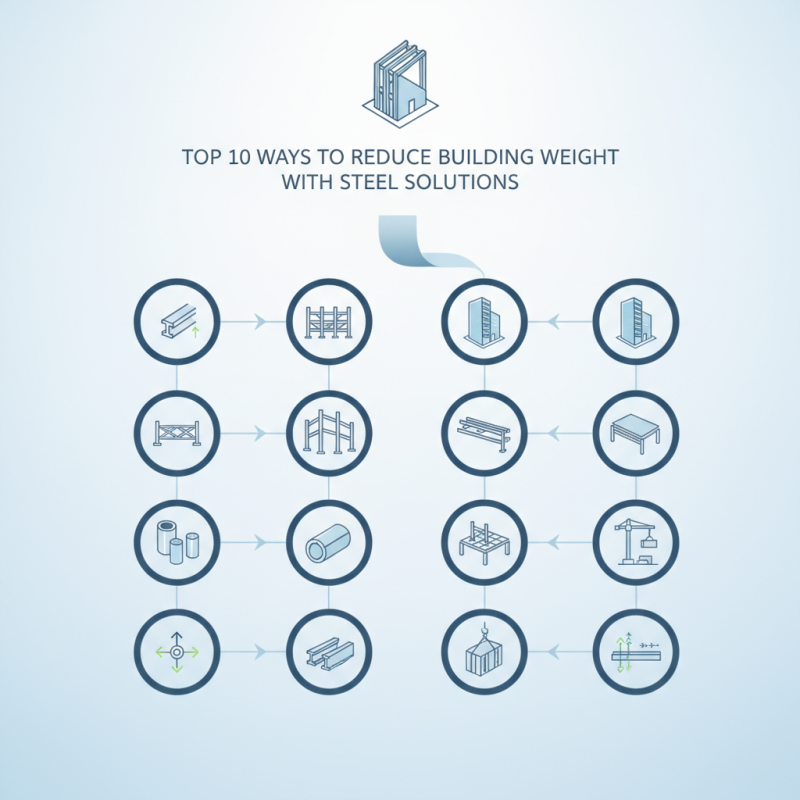
The article "Top 10 Ways to Reduce Building Weight with Steel Solutions" explores the critical role of building weight in construction and how it impacts structural integrity and material efficiency. It delves into the advantages of utilizing steel as a primary material, highlighting its strength-to-weight ratio, which makes it an ideal choice for reducing overall building weight. Innovative design techniques such as optimized structural frameworks and advanced fabrication methods are also discussed, illustrating how to reduce building weight using steel effectively.
Additionally, the article presents case studies of successful lightweight steel building projects that showcase the practical applications of these concepts. As the industry trends toward more sustainable construction practices, it emphasizes the future potential of steel solutions in minimizing resource use while maintaining robust building performance. Overall, the insights provided serve as valuable guidance for architects and builders aiming to enhance project sustainability through reduced building weight.
