BLS Structural Steel
In the landscape of modern manufacturing, understanding "how steel forming works in manufacturing" remains crucial. Renowned expert Dr. Emily Carter states, "The precision in steel forming defines modern engineering." Steel forming involves various techniques that shape raw metal into vital parts.
Processes like forging, rolling, and extrusion transform steel into usable forms. Each method applies force to the material, altering its shape and properties. However, challenges arise in achieving perfect dimensions. Variations can occur due to temperature fluctuations or material inconsistencies. These issues necessitate constant adjustment and precision.
Despite advancements, there’s always room for improvement in steel forming techniques. Manufacturers often grapple with balancing speed and accuracy in production. Understanding these intricacies helps industry professionals refine their methods and enhance quality. As we explore this topic, it’s essential to reflect on these realities and the ongoing quest for perfection in manufacturing.
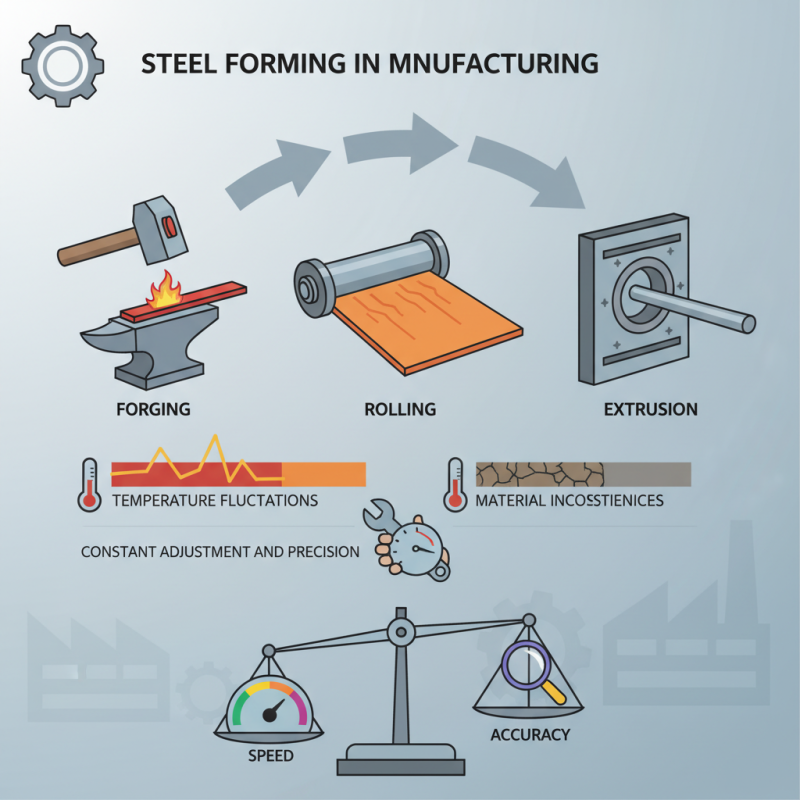
Steel forming processes are pivotal in the manufacturing industry. These methods include forging, rolling, and extrusion. Each process alters the steel's shape and properties. In 2022, the global steel forming market was valued at approximately $3 billion. This highlights the demand for steel products across various sectors.
Forging is a popular technique. It involves shaping steel using compressive forces. This method increases steel's strength. Rolling, on the other hand, reduces thickness by passing steel through rollers. It is common for sheet metal manufacturing. Extrusion forces steel through a die to create long shapes, such as pipes. The choice of process depends on the intended application. Custom solutions are often needed for unique specifications.
Tips: When choosing a process, consider the material properties needed. Is strength or flexibility more important? It’s essential to have clear specifications. Additionally, incorrect forming can lead to weak spots in the material. Always test and adjust methods to optimize outcomes. Revisiting designs periodically can also be beneficial.
Steel forming is a crucial step in manufacturing. Key techniques include rolling, forging, and extrusion. Each method has its unique process and advantages.
Rolling involves passing steel through rollers to reduce thickness. This technique is efficient and can produce sheets and plates. However, rolling can create internal stresses that affect the metal's properties. Careful control of temperature and speed is crucial.
Forging shapes steel by applying compressive forces. It can improve the metal’s strength and grain structure. Yet, it can be energy-intensive.
Extrusion forces molten steel through a die to create long shapes. This process allows for complex cross-sections but can lead to material waste. Understanding these techniques is essential for effective steel manufacturing.
In the world of manufacturing, understanding steel grades is crucial. Different steel grades possess unique properties, which significantly influence their formability. For example, high-carbon steels are strong but less malleable. In contrast, low-carbon steels demonstrate excellent workability. This difference impacts how easily the metal can be shaped during forming processes.
Formability is a complex subject. It varies not only with steel grade but also with the temperature and methods used. Hot-forming techniques often enhance ductility. However, errors can occur. For instance, using the wrong temperature can lead to cracks or defects. This highlights the intricate balance between the right conditions and desired outcomes in manufacturing.
Furthermore, steel grades are categorized based on their alloying elements. This categorization affects both strength and flexibility. A high-alloy steel can resist deformation under stress, but it might be challenging to form. Manufacturers sometimes overlook these nuances. They may choose a grade based on availability instead of suitability, leading to suboptimal results. Understanding these properties is essential for effective design and production.
Temperature and pressure play critical roles in steel forming processes. High temperatures can enhance ductility, allowing steel to bend without breaking. When heated, steel becomes malleable. This property is vital during forging and casting. Forming operations often utilize heat to reshape steel efficiently. Additionally, extreme pressure can yield stronger materials. It compresses the steel, improving its strength and density.
However, finding the right balance is not easy. Excessive heat can lead to oxidation, weakening the steel. Moreover, too much pressure can cause defects. These issues may arise during manufacturing and impact the final product. Operators must monitor conditions closely to ensure optimal results. Small deviations in temperature or pressure can alter the shape and integrity of the steel.
In practice, achieving consistent results is challenging. Each batch of steel might behave differently. Variations in material properties can lead to unexpected outcomes. Manufacturers often need to adapt their processes, which requires time and resources. Constant refinement of techniques is key to improving efficiency. Ultimately, understanding the interplay between temperature and pressure helps optimize steel forming operations.
| Process | Temperature (°C) | Pressure (MPa) | Efficiency (%) |
|---|---|---|---|
| Hot Rolling | 1100 | 40 | 85 |
| Cold Rolling | 25 | 60 | 90 |
| Forging | 1200 | 50 | 80 |
| Stamping | 300 | 70 | 88 |
| Casting | 1500 | 30 | 75 |
Steel forming plays a crucial role in the automotive and construction industries. In automotive manufacturing, steel shapes are used extensively. They provide strength and durability for vehicle frames and body panels. Steel forming processes like stamping and bending create complex shapes needed for these components. However, achieving consistent quality can be challenging. Variations in material properties may lead to defects.
In construction, steel plays an essential role in creating structures. Beams, columns, and reinforcements are formed using steel. These elements are vital for the stability and longevity of buildings and bridges. Forming steel allows for innovative architectural designs. Yet, the processes can sometimes produce waste and require revisions. Ensuring precision during cutting and welding is not always straightforward.
The complexity of steel forming highlights the need for continual improvement. Companies should invest time in quality checks. More research into advanced techniques could reduce errors. Embracing innovative technologies may enhance efficiency. Steel forming in these sectors is not without its struggles, and constant adaptation is necessary for success.
: The main methods are rolling, forging, and extrusion. Each technique serves different purposes.
Rolling involves passing steel through rollers to reduce thickness. It creates sheets and plates efficiently.
Rolling can induce internal stresses, affecting the metal's properties. Temperature and speed control is critical.
Forging shapes steel using compressive forces. This technique can enhance strength and improve grain structure.
No, forging tends to be energy-intensive. Careful energy management is necessary.
Extrusion pushes molten steel through a die, creating long, complex shapes. Waste can occur during this process.
Different steel grades affect formability differently. Choosing the right grade impacts shaping processes significantly.
Incorrect temperatures can lead to cracks or defects in the metal. This highlights a complex balance in manufacturing.
Alloying elements determine strength and flexibility. A high-alloy steel resists deformation but can be tricky to shape.
They may select steel grades based on availability rather than suitability, leading to poor forming results.
Steel forming is a crucial process in the manufacturing industry, involving various techniques to shape steel into desired forms. Key methods, including rolling, forging, and extrusion, are utilized to enhance the material’s properties and ensure optimal performance. Understanding how steel forming works in manufacturing requires a deep dive into these techniques, which manipulate the steel's physical characteristics based on its grade and formability.
Temperature and pressure also play significant roles in the efficiency of steel forming processes, significantly affecting the final product's integrity. The applications of these techniques are notably prevalent in sectors such as automotive and construction, highlighting the versatility and importance of steel in modern manufacturing. By mastering these processes, industries can produce components that meet stringent quality standards and performance requirements.
