BLS Structural Steel BLS Structural Steel

What Are Common Steel Fabrication Methods?

Time:2026-10-25 Author:Mason
0%

Understanding what are common steel fabrication methods begins with the material’s scale and responsibility. The World Steel Association reported approximately 1.88 billion tonnes of crude steel production worldwide in 2024. Much of that steel becomes beams, frames, vessels, bridges, and precision components. Each application demands different fabrication decisions.

Common methods include cutting, bending, rolling, punching, machining, welding, bolting, and surface finishing. A laser may produce a clean edge on a thin plate. A plasma cutter can handle thicker sections quickly. Press brakes shape flat steel into channels, while rollers form curved shells. Welders then join prepared parts using processes such as GMAW, FCAW, or SMAW. Bolted connections remain valuable where inspection, transport, or future replacement matters.

Materials expert Michael F. Ashby wrote, “Materials are the stuff of design,” in Materials Selection in Mechanical Design. His statement fits fabrication closely. Steel grade, thickness, heat input, tolerances, and corrosion exposure can change the correct method. There is no universal winner. That distinction is easy to blur.

The American Welding Society’s AWS D1.1 standard and AISC 360 provide important technical references for structural work. The U.S. Department of Energy also identifies iron and steel production as a major source of global industrial emissions. Efficient nesting, controlled welding sequences, and reduced rework therefore matter beyond appearance. A perfect process is unlikely. A traceable, inspected process is more realistic. This guide examines how each method works, where it performs well, and which compromises deserve closer attention.
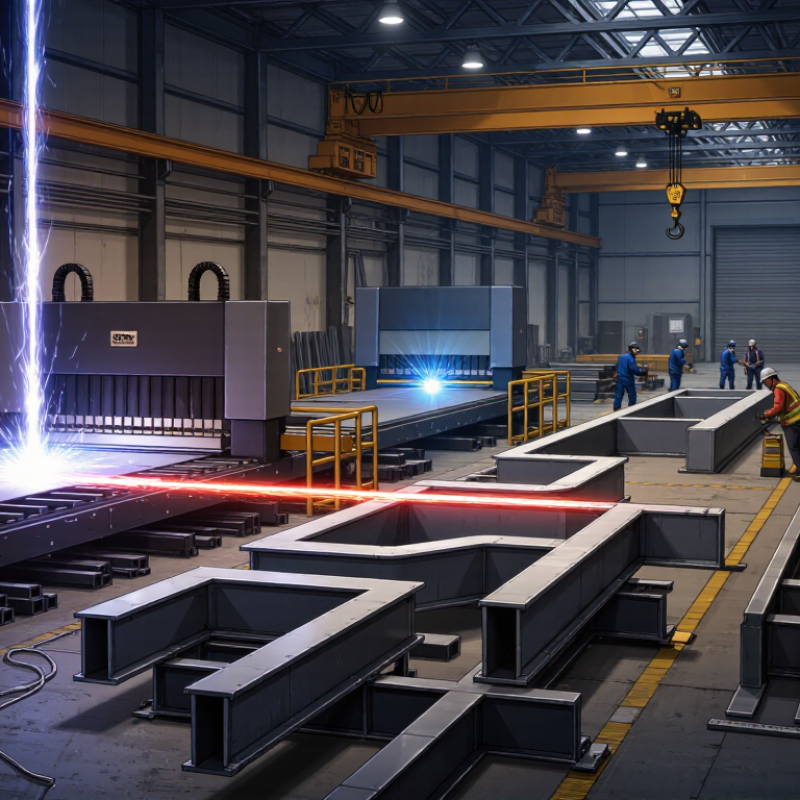
What Are Common Steel Fabrication Methods?

Steel Fabrication: Definition, Purpose, and Main Stages

What Are Common Steel Fabrication Methods?

Steel fabrication converts raw steel into usable structures, components, and equipment. Its purpose is practical: improve strength, fit, safety, and installation speed. The process usually begins with design review, material selection, and dimensional planning. According to World Steel Association’s World Steel in Figures 2024, global crude steel production reached about 1.89 billion tonnes in 2023. That scale shows why accurate fabrication controls matter.

Main stages include cutting, forming, joining, surface treatment, and inspection. Laser cutting, plasma cutting, and sawing create precise profiles. Rolling, bending, and pressing shape plates or sections. Welding is widely used for permanent joints, while bolting supports adjustment and easier field assembly. A fabricator may use robotic welding for repeatable seams, but skilled inspection remains necessary. Small errors multiply.

Surface preparation can include blasting, cleaning, and protective coating. These steps reduce corrosion risks, especially in humid or industrial environments. The International Energy Agency reports that steelmaking produces roughly 7% to 9% of global energy-related carbon dioxide emissions. Efficient nesting, reduced rework, and responsible material use therefore affect more than project cost.

In practice, fabrication is rarely perfectly linear. A drawing may need revision after a trial fit. Heat distortion can also change alignment. Experienced teams measure again, document deviations, and question assumptions before delivery. The ideal method depends on thickness, tolerances, production volume, joint design, and site conditions. Mistakes still happen. Good systems make them visible early.

Material Preparation and Cutting Methods for Steel

Steel fabrication begins before the torch or saw starts. Material preparation affects accuracy, safety, and waste. World Steel Association’s World Steel in Figures 2024 reports 1.89 billion tonnes of crude steel production in 2023. With this scale, small preparation errors can create significant scrap.

Fabricators should verify grade, thickness, heat number, and mill certificates. Surface rust, oil, and heavy scale need removal before marking. Straightening matters too. A slightly bowed plate can shift during cutting and produce uneven edges. Common methods include band sawing, shearing, oxy-fuel cutting, plasma cutting, laser cutting, and waterjet cutting. Laser cutting suits thin, precise parts, while oxy-fuel remains practical for thick carbon steel. Plasma handles fast production, but its heat-affected zone requires inspection. ISO 9013 provides quality classifications for thermally cut surfaces. A clean edge is not automatically a reliable edge.

Tips: Match the cutting method to thickness, tolerance, edge quality, and production volume. Use nesting software to reduce offcuts. The International Energy Agency notes that steel production creates about 7–9% of global energy-related carbon emissions, so efficient material use deserves attention. Still, perfect nesting is not always realistic. Distortion, remakes, and operator judgment can change the plan. Measure the first cut, inspect the edge, and adjust before running the full batch.

Common Steel Fabrication Cutting Methods

Approximate maximum carbon-steel thickness commonly associated with each cutting method. Actual capacity depends on equipment power, steel grade, edge-quality requirements, and operating conditions.

Oxy-fuel cutting is generally used for the thickest carbon-steel plates, while laser cutting is typically selected for thinner material when high precision and a narrow heat-affected zone are required. Plasma and waterjet cutting cover broader intermediate applications.

Forming, Bending, and Shaping Steel Components

What Are Common Steel Fabrication Methods?
Forming, Bending, and Shaping Steel Components

Steel fabrication turns flat sheet, plate, or structural sections into precise working components. The World Steel Association’s World Steel in Figures 2024 reports about 1.888 billion tonnes of crude steel production in 2023. Construction consumes roughly half of global steel demand, making reliable shaping methods essential for beams, brackets, frames, and panels.

Forming changes steel without removing significant material. Hot forming uses elevated temperatures to reduce force and improve ductility. Cold forming offers cleaner surfaces and tighter dimensions, but it can increase hardness and residual stress. Press brakes create controlled bends, while roll forming produces long profiles with consistent cross-sections. Stamping suits repeated components, especially when dies can maintain stable geometry. Plate rolling shapes large cylinders and curved shells through progressive pressure.

Bending accuracy depends on thickness, grain direction, tooling, and springback. A fabricator must check bend allowance rather than trust a drawing alone. Small errors accumulate quickly across a long assembly. No formula removes every surprise. A trial piece often exposes tool wear, uneven loading, or unexpected material behavior. The World Steel Association also notes that mechanical equipment represents a significant share of steel use, reinforcing the need for repeatable forming processes. In practice, inspection should include angle checks, surface cracking, edge distortion, and dimensional control after release from the tool. Even experienced teams can overbend a part, then discover the correction weakened its fit.

Joining Techniques: Welding, Bolting, and Riveting

Steel fabrication relies on three main joining methods: welding, bolting, and riveting. Their selection depends on load, access, inspection needs, and future maintenance. The 2024 World Steel in Figures report records about 1.89 billion tonnes of crude steel produced globally in 2023. That scale makes reliable joining practices essential across buildings, bridges, machinery, and industrial frames.

Welding creates a continuous joint by melting the base metal and, often, a filler metal. It suits complex shapes and permanent connections. However, heat can cause distortion, residual stress, and hidden defects. A weld may look smooth but still contain porosity. Visual inspection alone is not enough. Qualified procedures, welder competence, and non-destructive testing improve confidence. On busy fabrication floors, poor surface preparation remains a common weakness.

Bolting offers speed, controlled installation, and easier replacement. High-strength bolts transfer forces through friction or bearing, depending on the connection design. Torque or tension records should support inspection. Riveting is less common in new work, but it remains valuable in heritage structures and repair projects. Rivets provide durable mechanical fastening without welding heat. Access can be difficult, though. The International Standards Organization’s steelwork guidance stresses controlled tolerances and documented inspection for structural connections. In real projects, the best method is rarely universal. Cost estimates often overlook access, rework, and inspection time. That omission deserves more attention.

Finishing, Inspection, and Selection of Fabrication Methods

Steel fabrication methods include cutting, bending, welding, machining, and forming. Each method affects accuracy, surface quality, cost, and production speed. Choosing correctly requires more than comparing prices. Material thickness, joint design, tolerances, and final use must guide the decision.

Finishing begins after fabrication. Grinding can remove sharp edges and visible weld irregularities. Blasting or polishing may improve surface texture before coating. Protective coatings help resist moisture, abrasion, and corrosion. However, a smooth appearance does not prove structural quality. Inspectors should check dimensions, weld profiles, surface defects, and coating coverage. Depending on the project, they may use visual checks, gauges, dye testing, or ultrasonic inspection. Records should include measurements, repair areas, and inspector qualifications.

Tips: Match the inspection method to the risk. Check hidden joints before access disappears. Keep clean, dated photographs. Never treat a bright finish as proof of strength. A rushed repair can look acceptable but perform poorly later. Selection is rarely perfect. A method that saves time may increase finishing work. A cheaper process may require tighter inspection. Experienced fabricators review these trade-offs before production begins, then adjust when real shop conditions reveal unexpected distortion or access problems.

What Are Common Steel Fabrication Methods? - Finishing, Inspection, and Selection of Fabrication Methods
Fabrication Method How It Works Typical Applications Key Advantages Important Limitations Common Finishing Requirements Typical Inspection Focus Best Selection Criteria
Plasma Cutting An electric arc ionizes compressed gas to melt and remove electrically conductive steel. Plates, brackets, base plates, structural components, and medium-to-heavy steel parts. Fast cutting of carbon steel, stainless steel, and other conductive metals; suitable for complex profiles. Creates a heat-affected zone and may leave dross or a slightly angled edge, especially at greater thicknesses. Deburring Grinding Rust protection Cut dimensions, edge quality, squareness, dross removal, and heat-related distortion. Choose when production speed and flexible profile cutting are more important than the finest edge finish.
Laser Cutting A concentrated laser beam melts or vaporizes steel along a programmed cutting path. Thin and medium-gauge sheet metal, precision panels, enclosures, and intricate profiles. High dimensional accuracy, narrow kerf, clean edges, and excellent repeatability. Equipment capacity can limit material thickness; reflective materials and operating cost may require special consideration. Light deburring Cleaning Powder coating Profile accuracy, hole diameter, kerf quality, edge discoloration, and burr formation. Choose for detailed shapes, small holes, tight tolerances, and low post-processing requirements.
Oxy-Fuel Cutting Fuel gas and oxygen heat steel to its ignition temperature, then a high-pressure oxygen jet removes the oxidized material. Thick carbon-steel plate, structural members, large sections, and heavy fabrication work. Effective for heavy plate; equipment is widely available and suitable for large cutting operations. Generally produces a wider heat-affected zone and lower precision than laser or waterjet cutting; not suitable for stainless steel without specialized processes. Slag removal Grinding Primer or coating Cut profile, bevel angle, slag, warping, and heat-affected areas. Choose for thick carbon steel when cutting speed, thickness capability, and cost are primary concerns.
Press-Brake Bending A punch and die apply controlled force to form sheet or plate into angles, channels, or other profiles. Brackets, panels, frames, channels, covers, and folded structural components. Produces repeatable bends without adding weld seams; supports efficient production of formed parts. Requires suitable tooling and bend allowances; springback and cracking can affect final geometry. Edge deburring Surface cleaning Coating Bend angle, bend radius, flange length, springback, cracking, and surface marks. Choose when a part can be made from one or more formed pieces instead of multiple welded components.
Roll Forming Continuous steel strip passes through successive roller stations that gradually create a fixed cross-sectional profile. Long channels, rails, studs, tracks, panels, and repeated structural profiles. High production efficiency, consistent profiles, and good material utilization for long parts. Best suited to constant cross-sections; dedicated tooling can increase setup cost and reduce flexibility. Edge treatment Galvanizing Paint or coating Profile dimensions, twist, bow, straightness, hole position, and surface damage. Choose for high volumes of long parts with the same cross-sectional shape.
Welding Heat, pressure, or both join steel components by melting the base metal, filler metal, or both. Frames, tanks, platforms, pressure-related assemblies, structural joints, and custom equipment. Joins complex assemblies and large components; suitable for many steel grades and joint configurations. Heat can cause distortion, residual stress, porosity, cracking, or incomplete fusion if the procedure is not controlled. Weld cleaning Spatter removal Grinding Coating Visual inspection, weld size, alignment, surface discontinuities, and non-destructive testing when required. Choose when permanent joints, complex assemblies, or load-bearing connections are required.
Machining Material is removed with cutting tools to achieve precise dimensions, holes, threads, and finished surfaces. Flanges, shafts, mounting surfaces, precision holes, threaded parts, and weldment interfaces. High dimensional accuracy and improved surface finish for critical interfaces. Generates chips and material waste; processing time and cost increase with tight tolerances or complex geometries. Deburring Polishing Protective oil Coating Dimensions, tolerances, hole position, thread accuracy, flatness, and surface roughness. Choose for precision features that cannot be achieved economically through cutting, forming, or welding alone.
Assembly and Mechanical Joining Prepared steel components are connected using bolts, screws, rivets, pins, or other removable or semi-permanent fasteners. Frames, access panels, modular structures, serviceable equipment, and field-installed assemblies. Allows disassembly, replacement, adjustment, and simplified field installation. Fastener holes require accurate alignment; joints may loosen, corrode, or require preload control during service. Deburring Thread protection Galvanizing Paint Fastener grade, torque or preload, hole alignment, joint fit-up, and corrosion protection. Choose when maintenance access, transportation, modularity, or field assembly is important.
Surface Finishing Surface preparation and protective treatments improve appearance, adhesion, wear resistance, or corrosion resistance. Indoor and outdoor steelwork, architectural components, machinery, platforms, and exposed structures. Extends service life and provides the required appearance or functional surface performance. Coating performance depends on surface cleanliness, profile, environmental conditions, and correct application. Abrasive blasting Painting Powder coating Galvanizing Surface cleanliness, coating thickness, adhesion, coverage, pinholes, runs, and cured condition. Choose according to corrosion exposure, operating temperature, appearance, wear, maintenance plan, and budget.

FAQS

What is steel fabrication?

Steel fabrication transforms raw steel into usable frames, parts, supports, and equipment. It improves fit, strength, safety, and installation speed.

What are the main stages of steel fabrication?

Common stages include design review, material preparation, cutting, forming, joining, surface treatment, and inspection. The sequence can change after trial fitting.

How should steel material be checked before cutting?

Verify the grade, thickness, heat number, and material certificates. Remove oil, rust, and heavy scale. Check whether plates are straight.

Which cutting methods are commonly used?

Common methods include sawing, shearing, oxy-fuel cutting, plasma cutting, laser cutting, and waterjet cutting. Each method suits different thicknesses and tolerances.

Which cutting method works best for thick steel?

Oxy-fuel cutting often suits thick carbon steel. Plasma cutting supports faster production. Heat-affected edges still need inspection.

Why does nesting matter during cutting?

Nesting places parts efficiently on a steel sheet. It reduces offcuts, waste, and material costs. Perfect layouts are not always realistic.

How are fabricated steel parts shaped?

Rolling, bending, and pressing shape plates and sections. A slightly bowed plate can shift during forming and create alignment problems.

What joining methods are used in steel fabrication?

Welding creates permanent joints. Bolting allows adjustment and easier field assembly. Robotic welding improves repetition, but inspection remains necessary.

Why is surface treatment important?

Cleaning, blasting, and protective coating reduce corrosion risks. This matters in humid areas, industrial spaces, and locations exposed to water.

How can fabrication errors be controlled?

Measure the first cut and inspect its edge before full production. Recheck dimensions after welding because heat can cause distortion. Mistakes still happen. Good records expose them early.

Conclusion

Steel fabrication is the process of transforming raw steel into functional components, structures, or products through a series of planned operations. It typically begins with material preparation, where steel is measured, marked, and cut using methods such as sawing, shearing, drilling, or thermal cutting. These steps help create accurate parts while reducing waste and preparing the material for assembly.

The next stages involve forming, bending, and shaping steel to achieve the required dimensions and angles. Components can then be joined through welding, bolting, or riveting, depending on design requirements, load conditions, and ease of maintenance. Finally, fabricated steel may be cleaned, coated, painted, or otherwise finished to improve its appearance and resistance to corrosion. Inspection is essential throughout the process to confirm accuracy, strength, and compliance with specifications. Understanding what are common steel fabrication methods helps manufacturers and engineers select the most suitable approach for each project.

Mason

Mason

Mason is a seasoned marketing professional with a deep expertise in the company's offerings and a passion for driving brand awareness. With a strong background in digital marketing strategies, he has an innate ability to connect with diverse audiences and effectively communicate product benefits.......